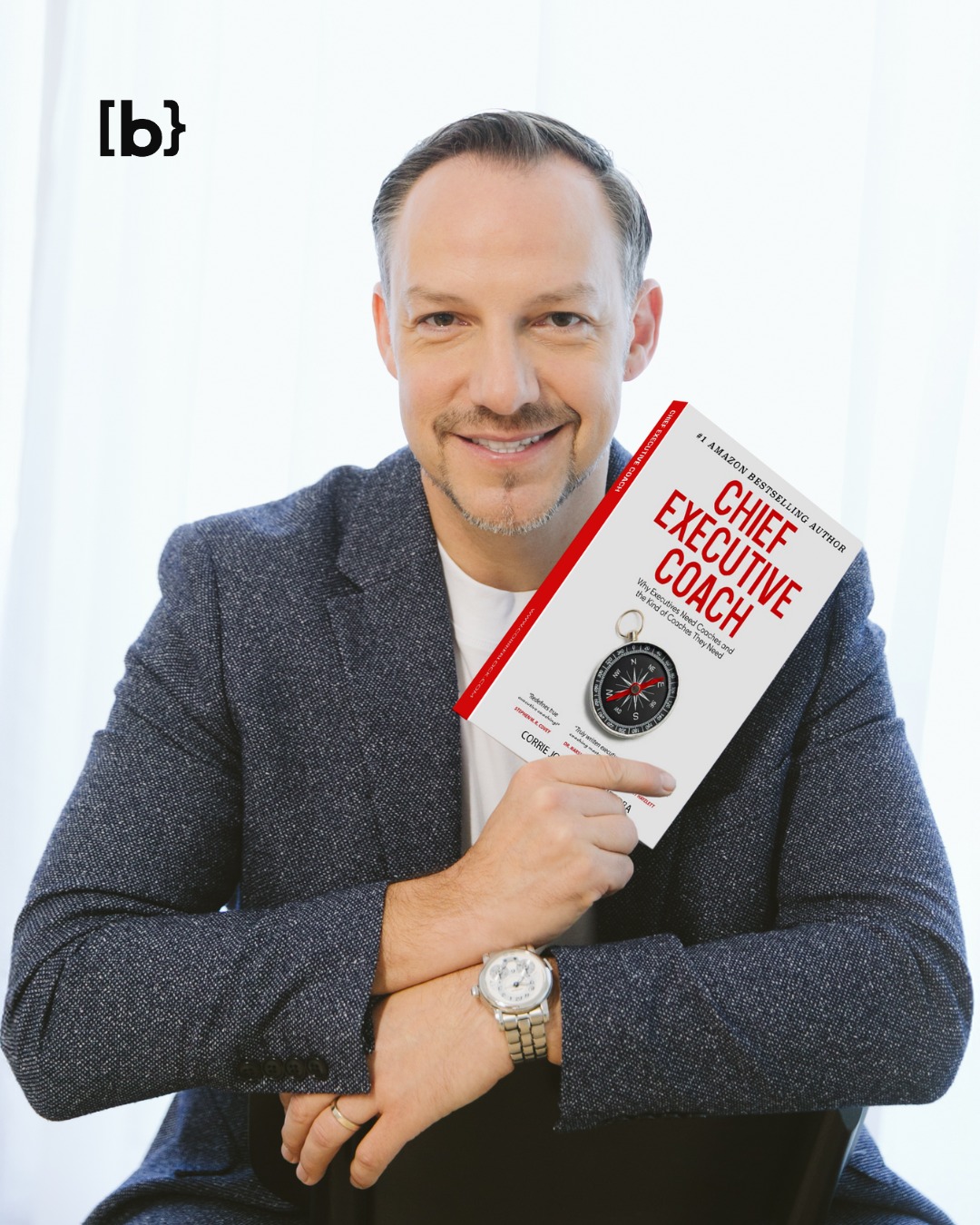
Ioannis Ioannou of London Business School published a commentary in Poets&Quants this week called "Who Will Manage The AI Agents?" I’ve been arguing with it in my head ever since, which is usually a sign something’s worth reading. Here it is: https://poetsandquants.com/2026/11/23/commentary-who-will-manage-the-agents/?pq-category=thought-leadership
Here’s his argument, as fairly as I can put it. Companies are stripping out layers of management while handing more and more decisions to AI agents. Anyone can license the same models, so the models aren’t the advantage. The advantage is in managing them: deciding what to delegate, checking and correcting what agents do, and standing behind the results. That takes years of practice to build, which makes it hard to copy. And he says business schools should teach it, with confidence.
I agree with more of this than I expected to.
He’s right that responsibility doesn’t move to the software. In his words, when an agent makes a mistake, "the company and its customers pay for it, while the agent itself has little at stake." I wrote a while back that AI "can draft, summarize, and generate. It cannot give you courage, integrity, or accountability." Nothing I’ve seen this year has changed my mind.
He’s also right that managers matter, and he brings evidence for it. He cites work by Edward Lazear and colleagues at a large service company, where replacing a supervisor from the bottom tenth with one from the top tenth raised a team’s output about as much as adding a tenth worker to a team of nine. And he cites the 2023 experiment with 758 Boston Consulting Group consultants: on tasks suited to GPT-4, the quality of their work rose by more than 40 percent, and on a task beyond it, they were 19 percentage points less likely to get the right answer than colleagues working without it. Knowing where the tool can be trusted is a judgement call. Somebody has to make it.
So far, so good. Here’s where I get off the bus.
He treats managing agents as a new capability. I don’t think it is. It’s the oldest one in the building, wearing new clothes.
Look at the most telling number in his piece. In a 2026 Ivanti survey he quotes, 85 percent of IT professionals said every AI agent and workflow had a named, accountable owner. Only 42 percent said accountability was clear in practice. That gap isn’t an AI problem. Plenty of human teams have a name in the owner box and nobody who actually answers for the result. I’ve defined empowerment for years as the place "where responsibility = resources, and authority = accountability." A name on a chart with no authority to change anything is a scapegoat waiting for its moment.
And this is the part some of you won’t like. If your company couldn’t manage people well, it won’t manage agents well either. The firms cutting managers fastest are often the ones that never really believed management was a skill in the first place, which is exactly why they think it can be replaced.
Think about what a good manager actually does all day. An agent works inside the limits you set. A person decides, every single day, how much of themselves to give you when you’re not looking. I’ve written that "your margin is made in the dark, when no one is “managing” at all". The hardest part of a manager’s job was never checking outputs. It was earning effort from people who could choose to withhold it. Cutting those managers to pay for agent oversight swaps the harder skill for the easier one, and then calls it a strategy.
There’s a second problem hiding in his conclusion. He accepts that companies may need fewer managers, and says the ones who remain "will each be responsible for far more decisions." He’s right that they’ll need choosing with more care. But fewer people carrying more decisions is how you build the very bottleneck delayering was supposed to remove. In Love@Work I made the case that pushing authority down to the people closest to the work is what speeds up decisions and execution. Stack every decision on a thinner layer of managers and you haven’t flattened anything. You’ve just moved the queue.
Then there’s the business schools. He sees this as a task for management education, and I’d love to see them take it up. But a CEO who waits for an MBA curriculum to catch up is making the same mistake I’ve warned individual professionals about: "When did professional development become something you outsource to HR?" Your agents are already making decisions this quarter. The question of who answers for them is yours today, and it sits on the CEO’s desk, because it’s a question about authority, and authority starts at the top.
So here’s where I land. Ioannou is right that accountability is the scarce thing in an age of cheap intelligence. Where I part company with him is the idea that it’s a fresh skill to be taught. It’s the old discipline of giving one named person real authority, real resources and a real reason to care, and most organisations never mastered it with people. The agents haven’t created that problem. They’ve just made it impossible to hide.
The test I’d want any chief executive to pass is simple enough. Take the agent that touches your customers most. Can you name the one person who answers for it when it gets something wrong? And could that person switch it off without asking anyone’s permission? If the answer to the second question is no, you don’t have an owner. You have a witness.
If you’d like to work through what this means for you and your own executive team, Book a call: https://www.corrieblock.com/connect/